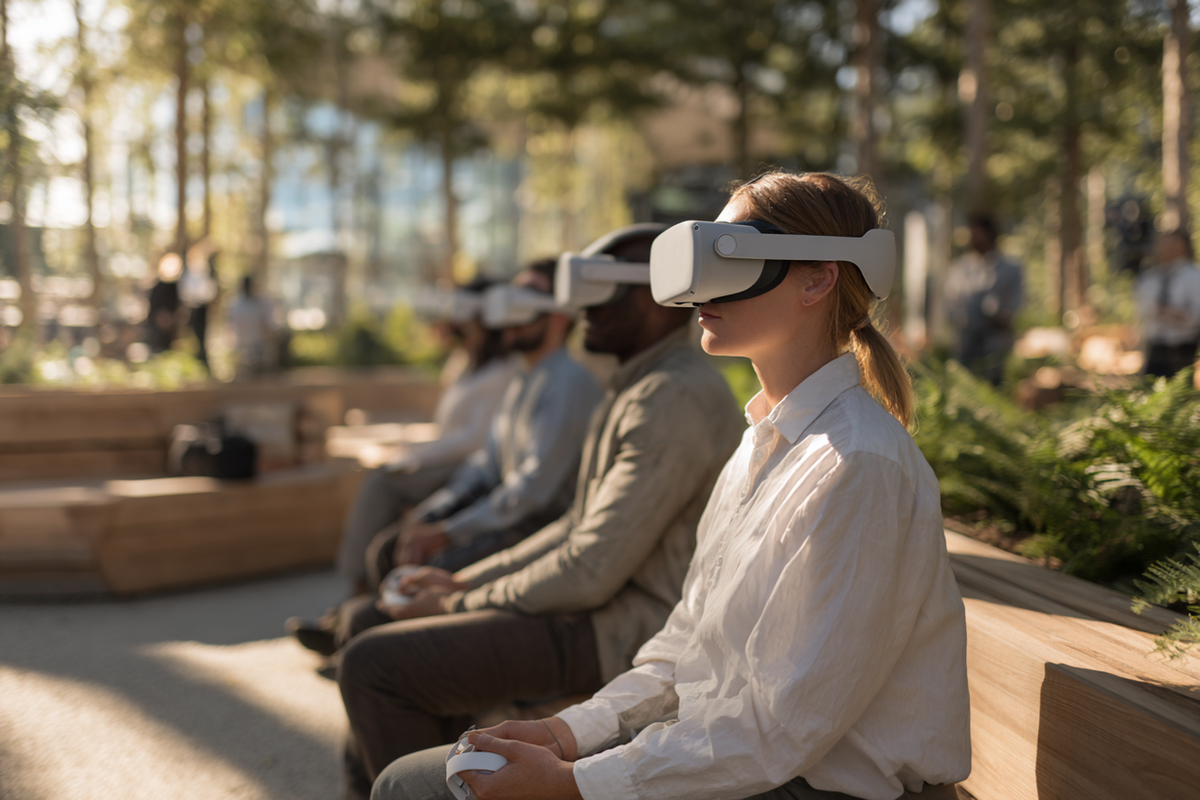
What are immersive wellbeing environments?
Immersive wellbeing environments are digital spaces built around an activity such as guided movement, reflection or a shared experience. Visuals, sound, pacing and interaction are designed together. The platform can range from a screen-based experience to VR, AR or mixed reality.
Do immersive experiences always need a VR headset?
No. The delivery format follows the audience and setting. Some projects use headsets; others use websites, mobile devices or displays. Choose the format early so navigation, visual detail, accessibility and performance can be designed for the intended hardware.
Can you create content for a sensory room?
We can discuss immersive visual environments and interactive content as part of a sensory-room brief. Define the room, display system, lighting, sound and user controls with the responsible team. Content production is distinct from architectural design or clinical assessment of the space.
How do you plan comfort and accessibility?
The brief should cover clear instructions, ways to pause or leave, user control over intensity and alternatives to headset interaction. Movement and camera behavior need to suit the activity and audience. Testing with intended users helps identify practical barriers before launch.
Can an environment support movement or group activities?
Movement inputs, feedback and shared activities can be explored where the selected hardware and application support them. The project needs a defined interaction model, physical-space requirements and, for shared experiences, a plan for moderation and participant data.
What do you need to scope a 3D simulation?
Start with the intended activity, audience, location, devices and delivery platform. Include references for the visual world, approved guidance, interaction requirements and launch timing. These details help separate the content, application and hardware work needed.